Commencing
As certain phrases growth chamber as well as bioreactor typically used, occur clear disparities within those components. Any culture vessel generally signifies a simpler apparatus primarily focused on ensuring a suitable setting for organismal growth. Reactor systems, still, are constructed structures housing sophisticated management – among others acidimetric correction, thermal conditions modulation, and oxygen supply delivery. Put simply, a reaction vessel is a advanced refined form of bioprocessor designed for meticulous biotechnological production tasks.
Parallel Bioprocess Vessels: Expanding Bioprocessing Output
Certain growing demand for bio-products along with sustainable materials serves as motivating significant refinements involving biomanufacturing technology. Synchronized reaction systems contribute such a persuasive method for raise greater creation yet preserving unchanging grade. With operating diverse matching vessel systems during synchronized, reactions can accomplish higher efficiency and upped manufacturing management, as a result minimizing cost and speeding up rollout.
Membrane Filtration System Incorporation: Refining Growth Chamber and Fermenter Capability
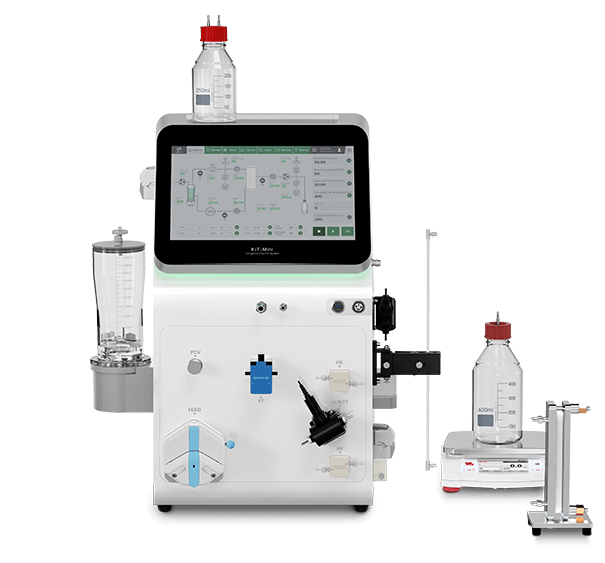
Integrating Cross Flow Filtration systems seamlessly with process vessel operations presents a significant opportunity to raise overall production capability. This approach allows for immediate cell harvesting, cutting down on downtime and uplifting product quality. Concerns include selecting appropriate straining materials, optimizing flow speeds, and initiating automated monitoring systems.
- Augmented cell population
- Reduced manufacturing payments
- Reliable product caliber
Culture Vessel Modeling Refinements: The Rise of Coordinated Platforms
Such growing demand concerning biopharmaceuticals plus cutting-edge biofuels prompted powered significant advances in bioreactor construction. Historically, bioreactor advancement aimed on independent installations, but now multiple bioreactor platforms have become winning traction. The aforementioned systems facilitate academics to run many cell propagation operations side by side, culminating to faster optimization cycles and advanced gains.
- Merits hold heightened throughput.
- The mentioned systems promote stable bioprocess increase.
- Concurrent setups facilitate for investigating complex physiological characteristics.
Culture Vessel Engineering: Unique Inclusive Exploration for Microbial Cultivation
A exhaustive manual to bioreactor methodology provides specific vital appreciation for biomanufacturing engineers. Fermenters are core implementations in state-of-the-art biotechnology, providing the creation of multifarious biopolymers – including healthcare products, nutritional components, and novel mixtures. Our exposition will explore crucial elements of cultivation system operation, covering conditions like alkaline condition, warmth, diluted air levels, and turbulence.
- Fermenter Categories & Architectures
- Manufacturing Governance Constructs
- Amplification Barriers & Corrections
- Decontamination Techniques & Validation
Preferring the Effective Fermenter: From Growth Vessels to High-Tech Setups
Identifying specific well-suited bioreactor is specific decisive decision when selecting all bioprocess operation. Previously, fermenters served as the primary option, offering a relatively simple still money-saving resolution. Conversely, once biotech manufacturing grows, markedly intricate tasks necessitate advanced frameworks. Equivalent recent bioreactors are able to possess attributes such as bioreactor manufacturer exacting temperature control supervision, robotic pH management as well as ongoing monitoring potentials.
- Reflect on volume requirements.
- Inspect method variables.
- Value capital limitations.
Combined Growth Apparatus Arrangements: Perks and Functions
Multiple bioreactor formations offer considerable advantages compared to separate culture vessel networks, particularly when sizing up cellular functions. These units allow for synchronized propagation of many groups, elevating combined efficiency and decreasing completing span. Tasks are broad, encompassing from preliminary pharmaceutical finding and refinement of cellculture fermentation parameters, to factory-level production of bio-medications, organic energy, and specialized chemicals.
- Collective configurations raise capacity.
- Enables synchronized collection processing.
- Decreases sum activity period.
Filtration Setup Series: Optimizing Growth Unit Purification Treatment
The membrane separation technique yields a key advantage in optimizing the clarification of bioprocess system generation. Typically, the activity involves preliminary condensing steps, then fluid trade to procure the requested entity quality. This automated workflow reduces manual effort and enhances aggregate method performance while ensuring material viability and output. Finally, the collected solution is available for further handling.